Lympha is an ancient Roman deity of fresh water: one of the twelve deities Varro lists as duces, 'leaders' of the Roman farmers, 'for without water all agriculture is parched and poor'. And she was not a single goddess: there were as many Lymphae as there were water sources — springs, pools, wells — each tied to her own water. She often appears alongside Fons, the god of springs, and is almost a synonym of nympha, the nymph — though not quite: an ancient dedication distinguishes 'nymphis lymphisque augustis', to the nymphs and to the august Lymphae — an inscription carved, tellingly, to celebrate the restoration of a water supply: the continuity of the flow was a serious matter two thousand years ago already. And the roots of the cult run deep in ancient Italy: on the Tablet of Agnone, the sacred bronze of the Samnites, the diumpaís appear — the Lymphae in the Oscan tongue — among the deities invoked to bring moisture to the fields. The name itself is linked to limpidus: limpid, clear, transparent.
The goddess of the waters that help
Lympha was the deity to turn to in order to keep the water supply flowing — as Ceres gave bread, Liber wine and Pomona fruit, Lympha guarded the water that must never run dry. Yet her waters were not mere matter: they were waters that help. Identifying her with the spring Juturna, Varro writes:
'Juturna is the Lympha who helps: many in need hasten to her in search of her water.'
The wordplay was in earnest: in Juturna's name the ancients heard the verb iuvare, 'to help', and her shrine in the Roman Forum — a basin fed by a natural spring — drew those who sought healing. Propertius calls her 'Limpha salvoris' — the Lympha who saves — alluding to the beneficial, almost miraculous qualities of her waters.
And there is an intellectual side: for the Romans, water was the liquid through which the divine passed — it healed, restored youth, brought wisdom and inspiration — so much so that the Lymphae were likened to the Latin Camenae and the Greek Muses. In Augustan poetry the lymphae labour, dance, murmur, are talkative; and when neglected they grow angry, and bring drought until their rites are observed once more. Living water, demanding care — anyone who tends a flow, of water or of data, will recognise the lesson.
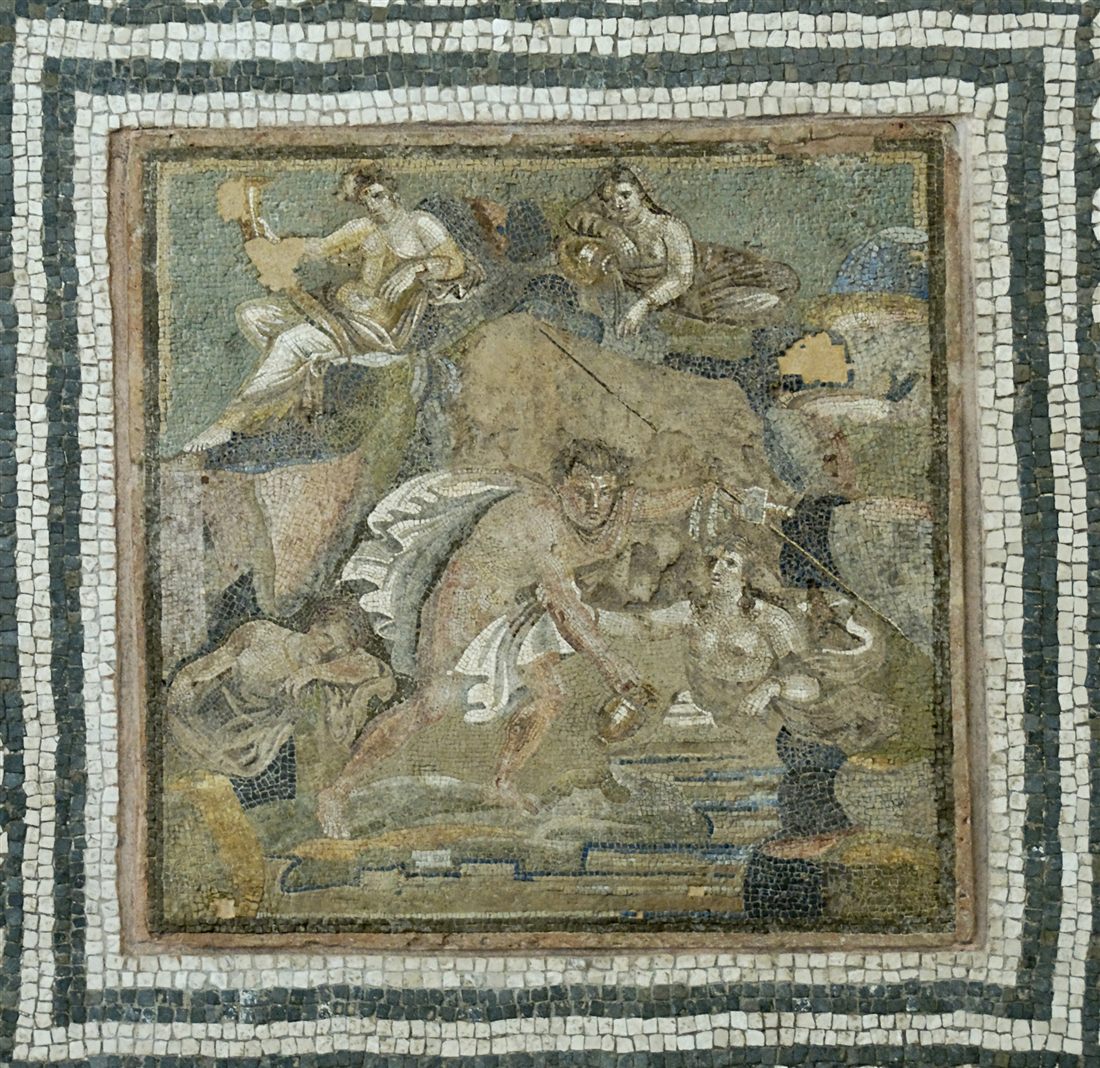
Their allure, the myths recounted, could become irresistible: as it did for Hylas, the young companion of Heracles who went down to draw water and was carried off by the nymphs of the spring, enchanted by his beauty — the scene of the celebrated Roman mosaic kept at Palazzo Massimo alle Terme.
Three meanings, one name
From that myth come three cores of meaning — and it is hard to imagine any better suited to a technology company:
Source and nourishment
What nourishes and makes things grow: the Italian linfa, 'sap' — and even the English lymph of the lymphatic system — descends directly from lympha, the vital fluid.
Clarity
From limpidus: clarity and transparency — documented systems, readable code, clean relationships with clients and suppliers.
Inspiration and wisdom
Like the Muses and the Camenae: knowledge flowing from the source to those who need it.
From Lympha to Lympha Technologies
The suffix Technologies completes the bridge: the goddess who poured water from her jar becomes the company that pours data, solutions and knowledge. The metaphor is 'the same jar, new contents': today the lifeblood of organisations is the flow of data and digital services, and our task is to keep it continuous, clear and secure, exactly like a well-tended spring.
Our logo, too, went on a journey of transformation to learn how to tell this story:
01 · Abstraction
The first logo was pure geometry: interlocking brackets, the nymph embracing the jar rendered so stylised as to become unreadable.
02 · The return to the real
When abstraction proves mute, you start again from classical iconography: the nymph holding the vessel — an ancient figure, drapery, an amphora in her hands.
03 · The readable form
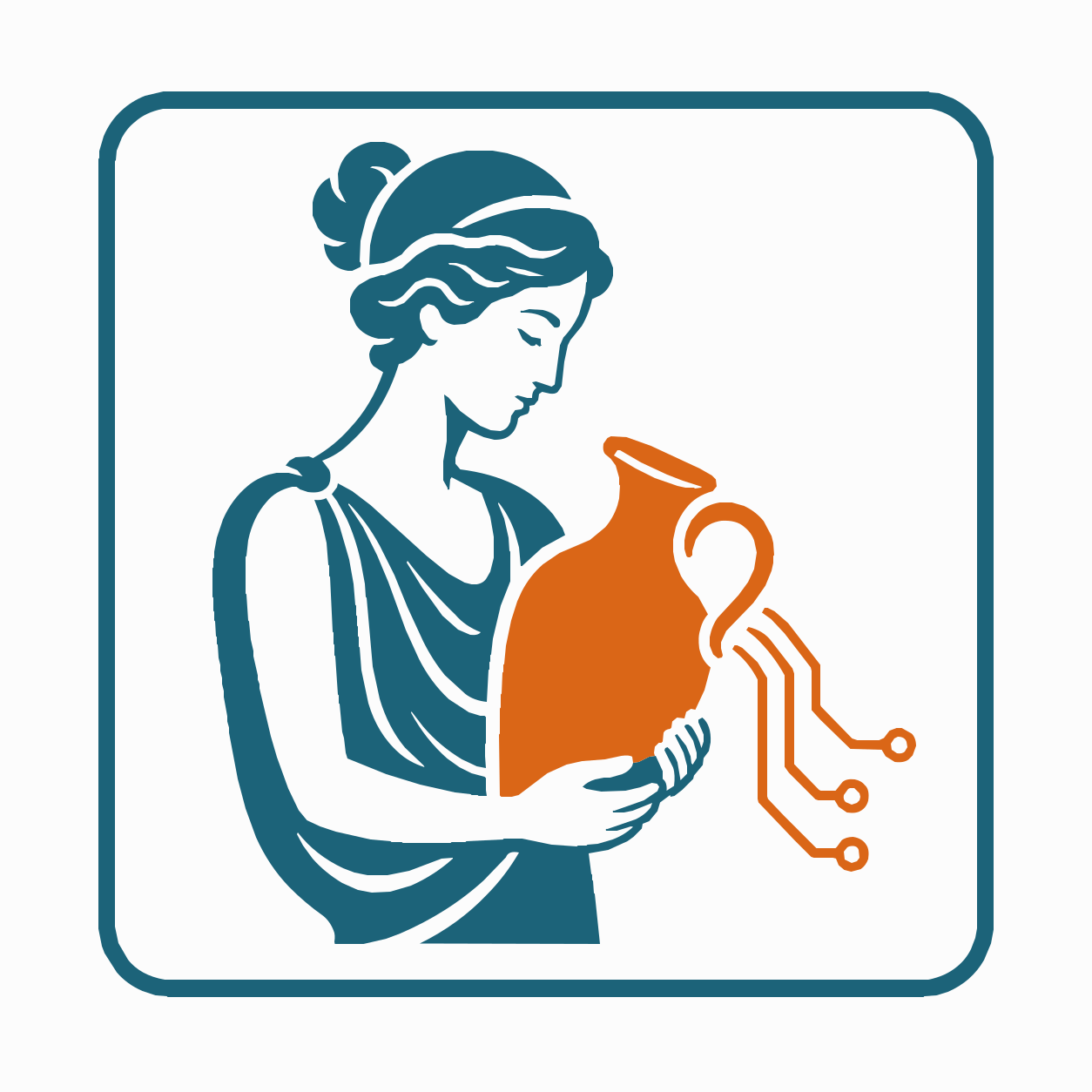
The silhouette becomes clean and monochrome: you can tell at a glance who she is and what she is holding. Form first, then colour.
04 · Myth + technology
The orange returns on the amphora, and the poured liquid becomes circuit traces — what carries and gives life to the flow of data.
The historical facts about Lympha are drawn from «Culto di Lympha» — romanoimpero.com (in Italian) and from the 'Lympha' — Wikipedia entry; the symbolic reading of the name and logo is, of course, our own.